The Rise of the Super App: Why One App Wants to Do Everything
The Rise of the Super App: Why One App Wants to Do Everything
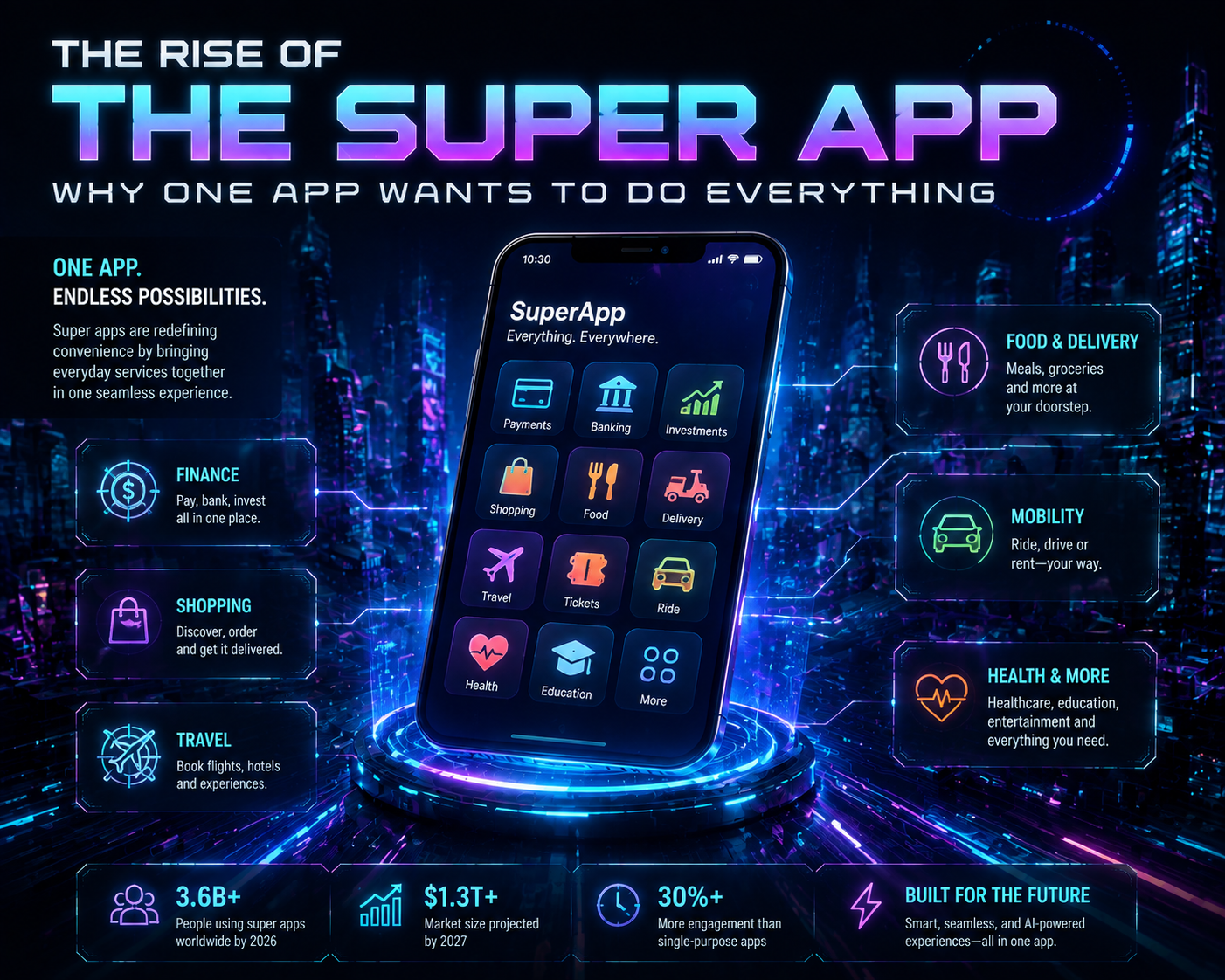
Most apps are built to do one thing well — a messaging app for messaging, a payments app for payments, a ride-hailing app for getting a car. The super app model rejects that entirely, betting that people would rather have one app handle nearly everything than juggle a phone full of single-purpose ones.
The Model That Started It
WeChat, in China, is the clearest example of what a super app actually looks like in practice: messaging, payments, ride-hailing, e-commerce, and even government services, all inside a single app. Rather than functioning as one product with one job, it operates closer to an entire digital ecosystem — a platform other services build on top of, accessed through one login and one interface people already use dozens of times a day.
Why Western and Gulf Companies Are Chasing the Same Model
Companies in Western and Gulf-region markets have been trying to replicate pieces of that model, folding more services into apps that started out narrower — a ride-hailing app adding payments and food delivery, a messaging app adding commerce features. None of them have fully replicated WeChat's breadth yet, but the direction of travel is consistent: fewer standalone apps, more single apps trying to cover several of a user's daily needs at once.
Keeping Users Inside One Ecosystem
The core motivation is engagement and data value. Every time a user has to leave one app and open another to complete a task, there's a real chance they don't come back right away — or ever. Keeping someone inside a single app for more of their daily activity means more time spent, more transactions completed without ever leaving, and a far more complete picture of that user's behavior than any single-purpose app could gather on its own.
Less Friction, More Habit
There's a genuine user-facing benefit too: fewer apps to open, fewer logins to manage, fewer separate payment methods to keep set up across different services. A single app that reliably handles messaging, payments, and bookings removes real friction from daily digital life, which is part of why the super app model has genuine appeal beyond just being convenient for the companies building it.
A Deliberate Strategic Shift, Not an Accident
This isn't incremental feature creep — it's a deliberate strategic bet that many companies are actively pursuing, distinct from the traditional single-purpose app design that dominated the previous decade of mobile software. Turning a narrow app into a broader platform requires real investment in new capabilities the company may not have originally built for, which is why it's treated as a genuine strategic direction rather than a routine product update.
Why It Still Matters
The super app model represents a real bet about where user attention and daily digital habits are heading — away from a phone screen full of specialized apps, toward a smaller number of platforms trying to capture as much of a user's day as possible. Whether any single company outside China fully replicates WeChat's breadth remains an open question, but the strategic direction — consolidate, don't fragment — is already reshaping how apps outside China are being built.
SEO Keywords: super apps, WeChat, mobile apps, app consolidation, digital ecosystems, user engagement, mobile strategy