The Rise of Screenless Wearables: Why the Future of Health Tech Has No Display
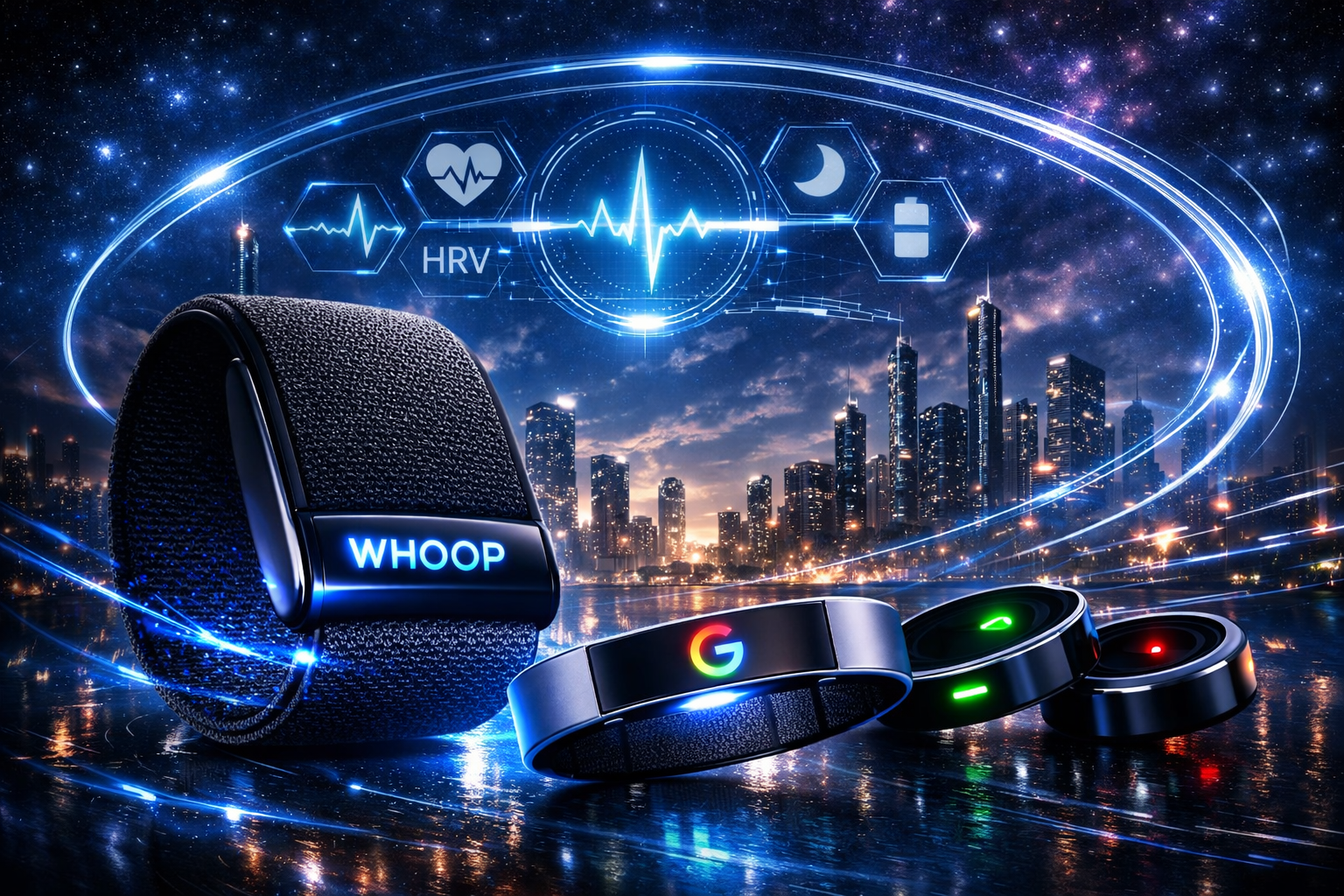
🔥 1. Why Screenless Wearables Are Exploding Worldwide The global boom of screenless wearables comes from three major shifts:
- People are tired of screens
Smartwatches became mini‑phones. Notifications, apps, distractions — all day, every day. Users wanted something quieter, simpler, and more focused. Screenless wearables deliver pure health data without interruptions.
- AI coaching is replacing visual interfaces
Modern wearables don’t need screens because: • AI explains your data • AI gives personalized coaching • AI tells you what to do next The interface is your phone — the intelligence is on your wrist.
- Recovery became more important than steps
The world finally realized: “How you recover matters more than how much you move.” WHOOP made recovery mainstream. Google and Garmin followed.
🟦 2. WHOOP — The Wearable That Started the Revolution WHOOP is the pioneer of screenless wearables. It focused on: • HRV • Recovery • Strain • Sleep • Stress load WHOOP became famous because elite athletes wore it: • LeBron James • Patrick Mahomes • UFC champions • Olympians • Formula 1 drivers WHOOP turned recovery into a global obsession — and created a new category of wearables.
🟦 3. Google Fitbit Air — The AI Wellness Band Google entered the screenless space with Fitbit Air, powered by Gemini AI. Fitbit Air focuses on: • Stress • Sleep • Daily readiness • Habit coaching • Android + Pixel integration It’s designed for everyday users who want intelligent health guidance without wearing a smartwatch. Fitbit Air made screenless wearables mainstream.
🟩 4. Garmin CIRQA — The Athlete’s Alternative to WHOOP Garmin launched CIRQA, a screenless band built for performance. It offers: • Sleep tracking • Recovery insights • Stress monitoring • 80+ workout modes • Optional subscription CIRQA is the closest competitor to WHOOP — but without mandatory membership. Garmin brought sports science into the screenless world.
🟧 5. Oura Ring — The Screenless Wearable for Longevity The Oura Ring isn’t worn on the wrist, but it’s one of the most influential screenless wearables. It tracks: • Sleep • HRV • Stress • Recovery • Women’s health Oura became huge in the longevity and biohacking community — CEOs, founders, and wellness influencers. It proved that screenless wearables can be fashionable.
🟪 6. Ultrahuman Ring Air — The Metabolic Health Powerhouse Ultrahuman is a rising competitor to Oura. It focuses on: • Metabolic health • Sleep • HRV • Recovery • Activity Ultrahuman is popular in India, UAE, and Europe — especially among fitness enthusiasts and biohackers. It shows how screenless wearables can be data‑rich without being visually loud.
🟫 7. WHOOP Body — The Future: Wearables Inside Clothing WHOOP took screenless wearables even further with WHOOP Body — sensors embedded inside: • Shirts • Shorts • Leggings • Sports bras This is the next evolution: Wearables that disappear completely.
⭐ 8. Why Screenless Wearables Are the Future Screenless wearables are booming because they deliver what modern users want: • Less distraction No notifications. No apps. No noise. • More intelligence AI coaching replaces screens. • Better accuracy Focused sensors outperform smartwatch multipurpose hardware. • Better comfort Lightweight, minimalist, and wearable 24/7. • Better recovery insights HRV, sleep cycles, strain, stress — the metrics that matter. Screenless wearables are not accessories. They’re health companions.
🏁 Final Thought The rise of screenless wearables marks a major shift in health technology. WHOOP pioneered it. Google and Garmin accelerated it. Oura and Ultrahuman expanded it. And WHOOP Body hints at a future where wearables disappear entirely. This is the new era of health tech — invisible, intelligent, and always on.