Old Dubai vs New Dubai: A City Living in Two Centuries at Once
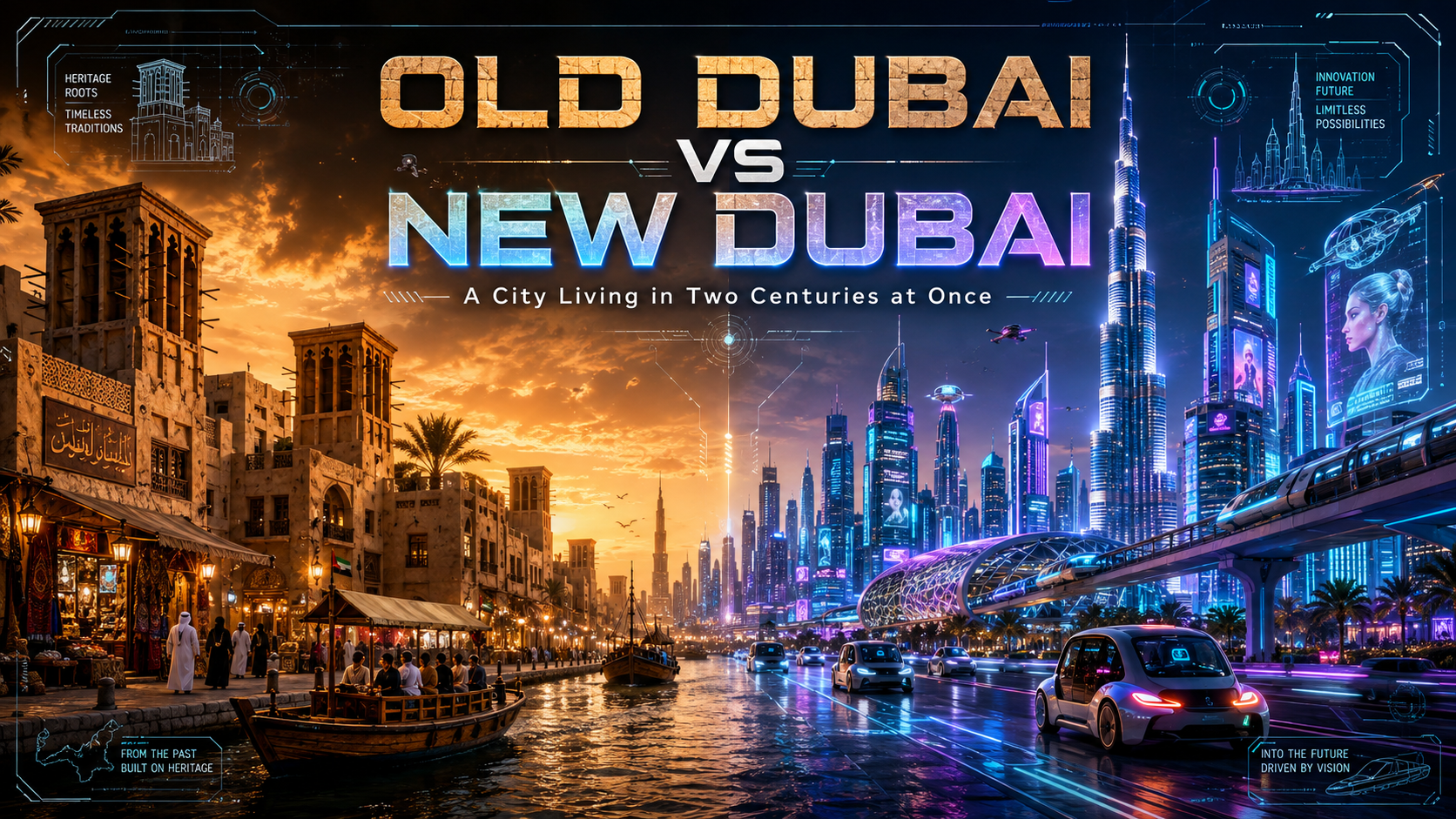
🕌 1. Two Different Dubais, a Few Kilometers Apart Drive from Deira to Downtown and you pass through what feels like two different centuries of the same city. One side is wind towers, wooden boats, and narrow souks; the other is glass towers, six-lane highways, and a skyline still under construction. Most cities take that transition slowly, over generations — Dubai compressed it into a few decades.
⛵ 2. The Creek That Started It All Long before Downtown or the Marina existed, Dubai Creek was the city's original commercial artery, lined with trading houses and dhow harbors. Wooden abra boats still ferry passengers across the creek today, the same basic crossing that's existed for generations, just steps from modern towers. It's one of the few places in the city where the original reason Dubai existed — trade, water access, a natural harbor — is still visible and still functioning.
🏘️ 3. Wind Towers Before Air Conditioning The historic Al Fahidi and Bur Dubai districts still have buildings with wind towers — barjeel — an early architectural solution for naturally cooling homes in a desert climate, long before air conditioning existed. Walking those narrow lanes today feels closer to a preserved old town than anything associated with modern Dubai's image. They're a genuine reminder that the city solved its climate problem with clever design decades before it could solve it with technology.
🛍️ 4. The Souks Still Work the Way They Always Did The gold and spice souks in Deira and Bur Dubai still operate on the same basic model they always have — small shopfronts, open display, face-to-face haggling. They're not preserved as a museum piece; they're functioning markets that happen to sit a short walk from some of the most modern retail in the world. That contrast — old-world commerce a few streets from ultra-modern malls — is one of the more understated things about the city.
🏙️ 5. New Dubai Built a Different Skyline From Scratch Downtown, the Marina, and the newer business districts weren't built by expanding the old city outward — they were built as entirely new districts on largely undeveloped land. That's part of why the transition feels so abrupt rather than gradual: new Dubai isn't a renovation of old Dubai, it's a parallel city built alongside it. Both halves have kept growing independently ever since, each with its own identity rather than one slowly replacing the other.
🌍 6. Why It Still Matters Most global cities either preserve their old core as a heritage district or let it fade as the city modernizes around it — Dubai did neither. Old Dubai kept functioning as a living, working part of the city instead of becoming purely a tourist backdrop, while new Dubai grew into one of the most recognizable modern skylines on Earth. That coexistence — a working historic trading port and a hyper-modern global city sharing the same municipality — is part of what makes Dubai genuinely unlike anywhere else.