HOW THE UAE BECAME UNITED
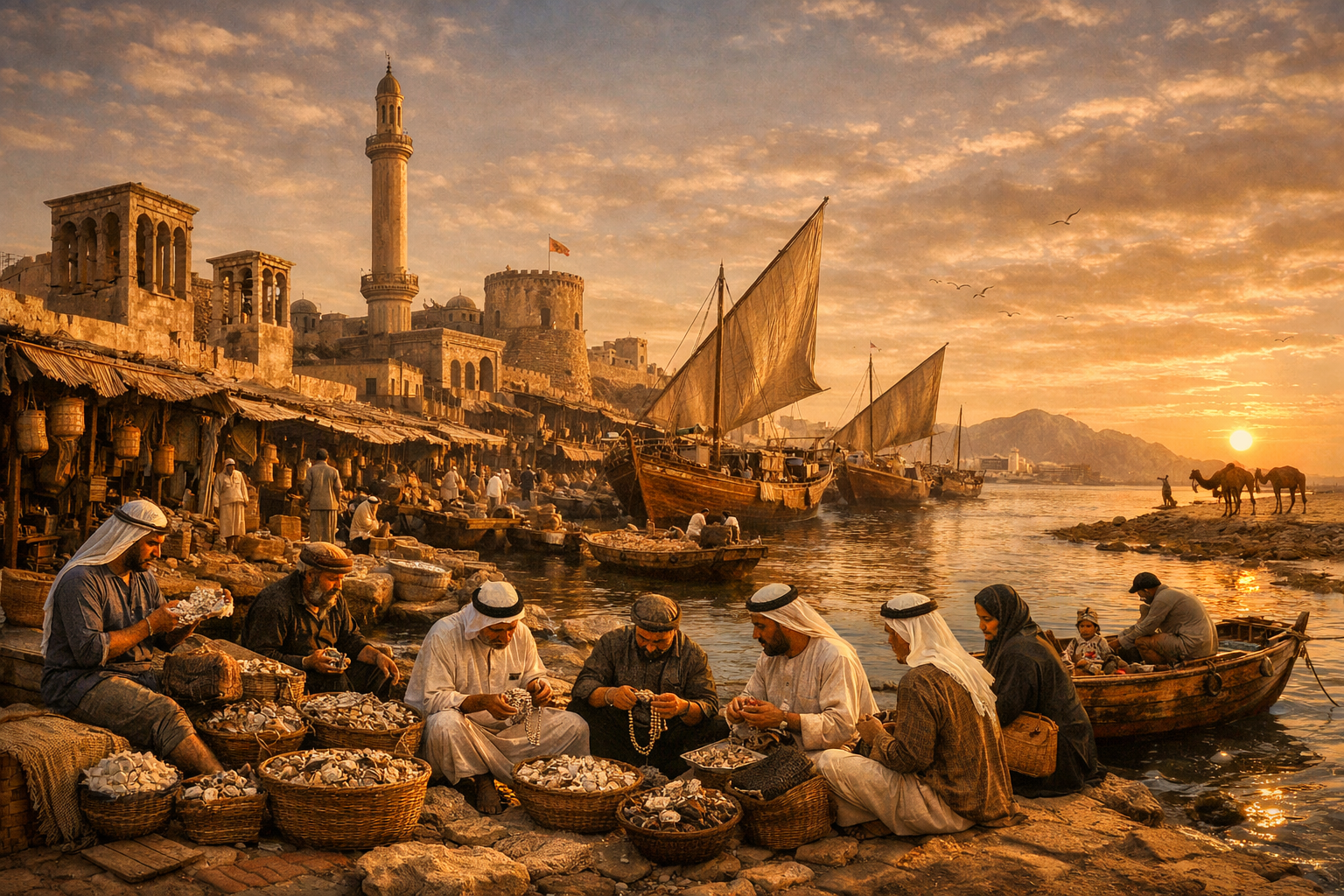
From Desert Tribes to a Global Nation: The Story of How the United Arab Emirates Became United Before skyscrapers, highways, and global cities, the UAE was a land of deserts, fishing villages, pearl divers, and tribal communities connected by tradition, survival, and ambition. Today, the United Arab Emirates is recognized as one of the world’s most advanced nations — home to futuristic cities, global businesses, and iconic landmarks such as the Burj Khalifa. But before the towers reached the sky, the country was shaped by a very different story. It was a story of desert life, resilience, cooperation, and a shared vision that eventually brought seven emirates together to create one nation.
Life Before the UAE: A Land Built on Tradition and Survival Before the formation of the United Arab Emirates in 1971, the region was known as the Trucial States. The communities that lived there depended heavily on the natural environment and traditional industries. Life was challenging.
The desert was harsh, resources were limited, and survival required strong family and tribal connections.
People lived mainly in:
Desert settlements Coastal fishing villages Oasis communities Each community developed its own way of life based on the environment around it. The Desert Life: Bedouins and Tribal Communities Many people in the region lived as Bedouins, adapting to the difficult desert environment. They traveled across the desert with their families and animals, especially camels, which were essential for transportation, trade, and survival.
The desert shaped their lifestyle:
Families lived in traditional tents made from woven materials Water sources such as oases became important gathering points Camels provided transportation and resources Trade routes connected communities across the region Life depended on cooperation. Tribes supported each other, protected their communities, and shared resources. Values such as hospitality, loyalty, and respect became deeply connected to Emirati culture.
The Coast: Fishing, Trading, and Pearl Diving While desert communities adapted to life inland, coastal communities built their lives around the sea. Before oil transformed the region, one of the most important industries was pearl diving.
For generations, Emirati divers traveled into the Arabian Gulf searching for natural pearls, which were highly valuable and traded internationally.
Pearl diving was difficult and dangerous.
Divers would:
Hold their breath for long periods Dive deep into the sea Collect oysters from the ocean floor Work together in teams on traditional boats called dhows The sea was not only a source of income — it was part of the identity of many coastal communities. Fishing and maritime trade also connected the region with countries across the Gulf, India, and East Africa.
Traditional Villages Before Modern Cities Before modern architecture transformed the landscape, towns were built around community needs. Buildings were designed using local materials and adapted to the climate.
Traditional homes included:
Wind towers for natural cooling Courtyards for family gatherings Thick walls to protect against heat Places like old Dubai and Abu Dhabi were small trading centers with markets, ports, and forts. The focus was not on size or luxury.
It was on community, trade, and survival.
The Road Toward Unity For centuries, the emirates existed as separate communities, each with its own leadership and traditions. However, they shared many similarities:
Common culture Similar language Shared history Economic connections In the 20th century, the region began experiencing major changes. The discovery of oil brought new opportunities, but the leaders of the emirates understood that cooperation would create a stronger future.
One of the strongest supporters of unity was Sheikh Zayed bin Sultan Al Nahyan, the ruler of Abu Dhabi.
He believed that the emirates could achieve more together than separately.
The Birth of the United Arab Emirates In 1971, six emirates came together to form the United Arab Emirates: Abu Dhabi Dubai Sharjah Ajman Umm Al Quwain Fujairah Later, in 1972, Ras Al Khaimah joined the federation. Together, the seven emirates created a new nation built on cooperation and shared goals.
The formation of the UAE represented more than a political agreement.
It represented a belief that unity could transform a region.
From Simple Beginnings to Global Success After becoming united, the UAE invested heavily in: Infrastructure Education Healthcare Transportation Business development Technology Cities that were once small trading ports became international destinations. Dubai developed into a global center for business and tourism.
Abu Dhabi became a major economic and cultural hub.
The country expanded from a region dependent on traditional industries into one of the world's most connected economies.
The Spirit That Built the UAE The UAE’s transformation was not only created by resources or technology. It was built on values that existed long before the federation:
Unity Determination Vision Adaptability Cooperation The same people who once navigated deserts and seas became the builders of modern cities and global industries. The journey from pearl boats to skyscrapers shows how a nation can transform when people share a common vision.
A Legacy of Unity The story of the United Arab Emirates is a story of transformation. It began with small communities surviving in one of the world’s toughest environments.
It grew through cooperation between seven emirates.
And it continues today as a nation looking toward innovation, space exploration, artificial intelligence, and the future.
The UAE’s greatest achievement is not only what it has built.
It is the unity that made those achievements possible.
Because before there was a modern nation, there was a shared dream — and that dream became the United Arab Emirates.