How Airports Use Invisible Technology to Move Millions of People Every day, millions of people around the world walk through airports with one goal
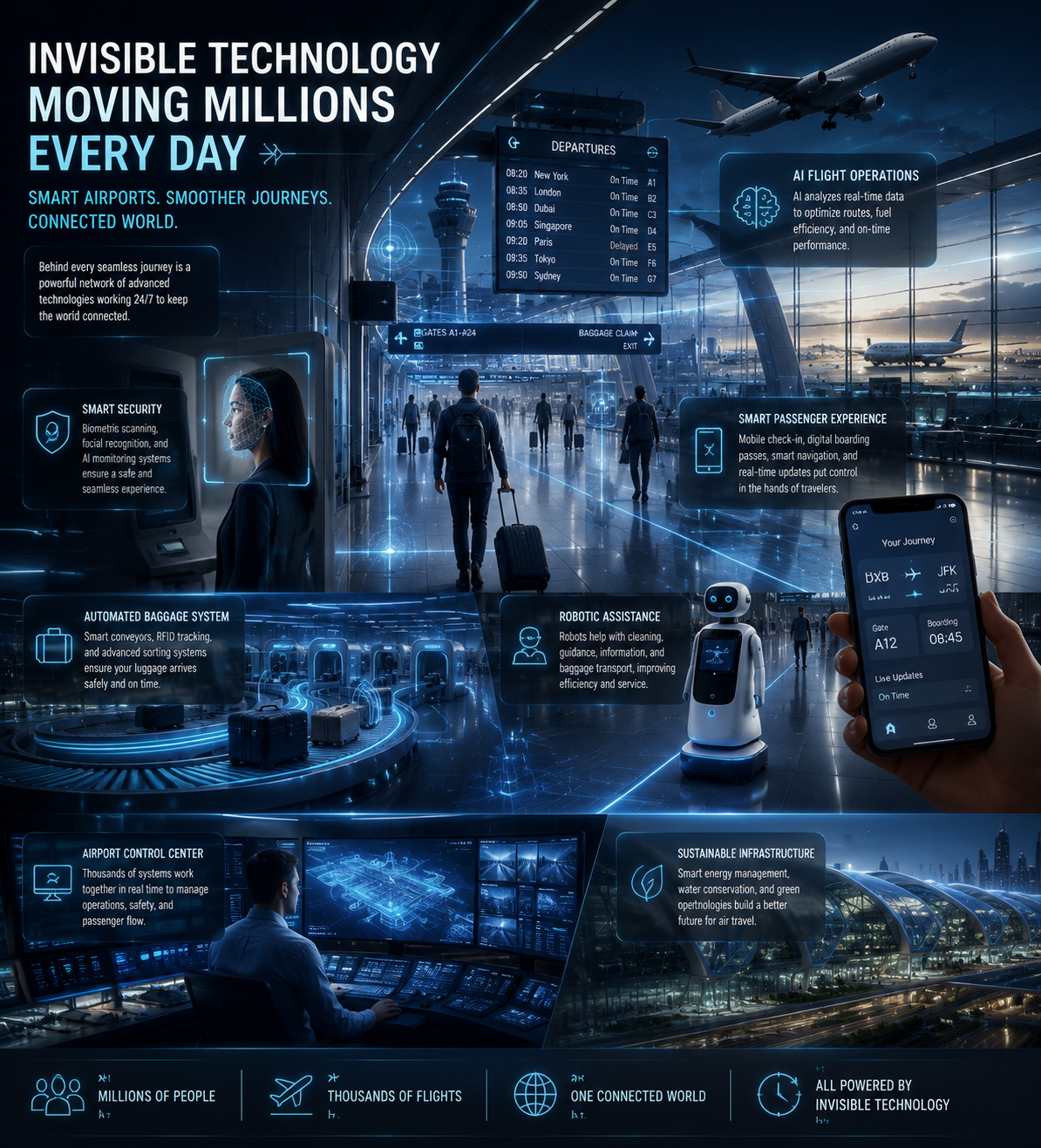
reaching their destination safely and on time. To passengers, an airport may look like a simple place with check-in counters, security gates, and airplanes waiting on the runway. But behind every flight is a massive network of invisible technology working continuously. From artificial intelligence and automated systems to advanced security and real-time tracking, airports have become some of the most technologically advanced environments in the world. Every second, thousands of systems communicate together to make global travel possible. The Hidden Digital Brain Behind Every Airport Modern airports operate like smart cities. Behind the scenes, advanced computer systems manage: Flight schedules Passenger movement Aircraft locations Security operations Baggage transportation Airport resources Every aircraft, passenger, and piece of luggage creates data. Airports use this information to make decisions faster and improve efficiency. Artificial intelligence helps predict delays, optimize airport operations, and identify possible problems before they happen. What looks like a simple boarding process is actually a highly connected digital operation. AI That Helps Plan Every Flight Before an airplane even leaves the ground, technology is already working. Airlines and airports use AI systems to analyze: Weather conditions Air traffic Fuel requirements Passenger numbers Aircraft availability These systems help determine the best routes, reduce waiting times, and improve fuel efficiency. Air traffic controllers also rely on advanced radar and communication systems to safely manage thousands of flights every day. The smooth movement of airplanes in the sky depends on millions of calculations happening behind the scenes. The Technology Behind Airport Security Airport security is one of the most important areas where technology plays a role. Modern airports use advanced systems such as: Biometric identification Facial recognition Smart scanners AI-powered monitoring systems Facial recognition technology can help verify passenger identities faster, reducing waiting times while improving security. AI systems can analyze patterns and detect unusual activities, helping security teams respond more effectively. The future of airport security is moving toward a more seamless experience where passengers spend less time waiting and more time traveling. The Invisible Journey of Your Luggage One of the most impressive airport technologies is the baggage handling system. When passengers check in their luggage, it begins an automated journey through a complex network of: Barcode scanners Conveyor systems Sorting machines Tracking technology Advanced systems can identify where each bag needs to go and move it through the airport automatically. Some airports use RFID technology, allowing luggage to be tracked more accurately throughout the entire journey. A suitcase that travels thousands of kilometers depends on technology every step of the way. Smart Airports and Passenger Experience Airports are becoming more personalized and convenient through smart technology. Passengers now benefit from: Mobile check-in Digital boarding passes Smart navigation apps Automated passport control Real-time flight updates Instead of standing in long lines, travelers can complete many steps digitally before arriving at the airport. Future airports may use AI assistants that guide passengers from arrival to boarding, providing personalized directions and updates. Robots and Automation Inside Airports Robots are becoming part of airport operations around the world. They can help with: Cleaning Customer guidance Information services Baggage transportation Automation allows airports to operate more efficiently, especially in large international hubs handling millions of passengers each year. Robots do not replace human service — they support employees by handling repetitive tasks and allowing staff to focus on customer needs. Dubai Airports: A Vision of the Future Dubai is one of the best examples of how technology is transforming air travel. Dubai International Airport (DXB) uses advanced systems to improve passenger experiences, including: Smart gates Digital services Automated processes Advanced security technologies As Dubai continues developing its smart city vision, airports are becoming more connected, faster, and more intelligent. The goal is to create a travel experience where technology works quietly in the background. The Future of Air Travel The airports of the future will become even smarter. Passengers may experience: Fully automated check-ins AI travel assistants Faster security processes Personalized airport experiences More sustainable aircraft operations The future airport will not only be a place where people catch flights — it will become an intelligent ecosystem that understands and supports every traveler. The Technology You Never See The next time you walk through an airport, remember that every movement is supported by thousands of invisible technologies. The boarding pass on your phone, the suitcase arriving at your destination, the aircraft landing safely, and the information displayed on screens all depend on complex systems working together. The most advanced technology is often the technology we do not notice. And inside every airport, an invisible digital world is working 24/7 to keep the world connected.