How a London Drum Shop Created the Sound of Rock: The Marshall Story
How a London Drum Shop Created the Sound of Rock: The Marshall Story
The instantly recognizable Marshall logo — the one stacked behind guitarists on nearly every major rock stage of the last sixty years — didn't start as an amplifier company at all. It started as a drum shop.
Guitarists Who Wanted It Louder
Jim Marshall opened a music shop in London in 1962, initially focused on drums. But the guitarists coming through his shop kept asking for something the market didn't yet offer: an amplifier louder and differently voiced than the Fender amps available in the UK at the time. Among the musicians pushing for it was a then-unknown Pete Townshend, later of The Who, along with Ritchie Blackmore. Marshall and a small team of technicians took that feedback seriously and built what became the first Marshall amplifier in response to a specific, repeated customer request — a genuinely rare origin story for a brand this iconic.
The Sound That Defined a Genre
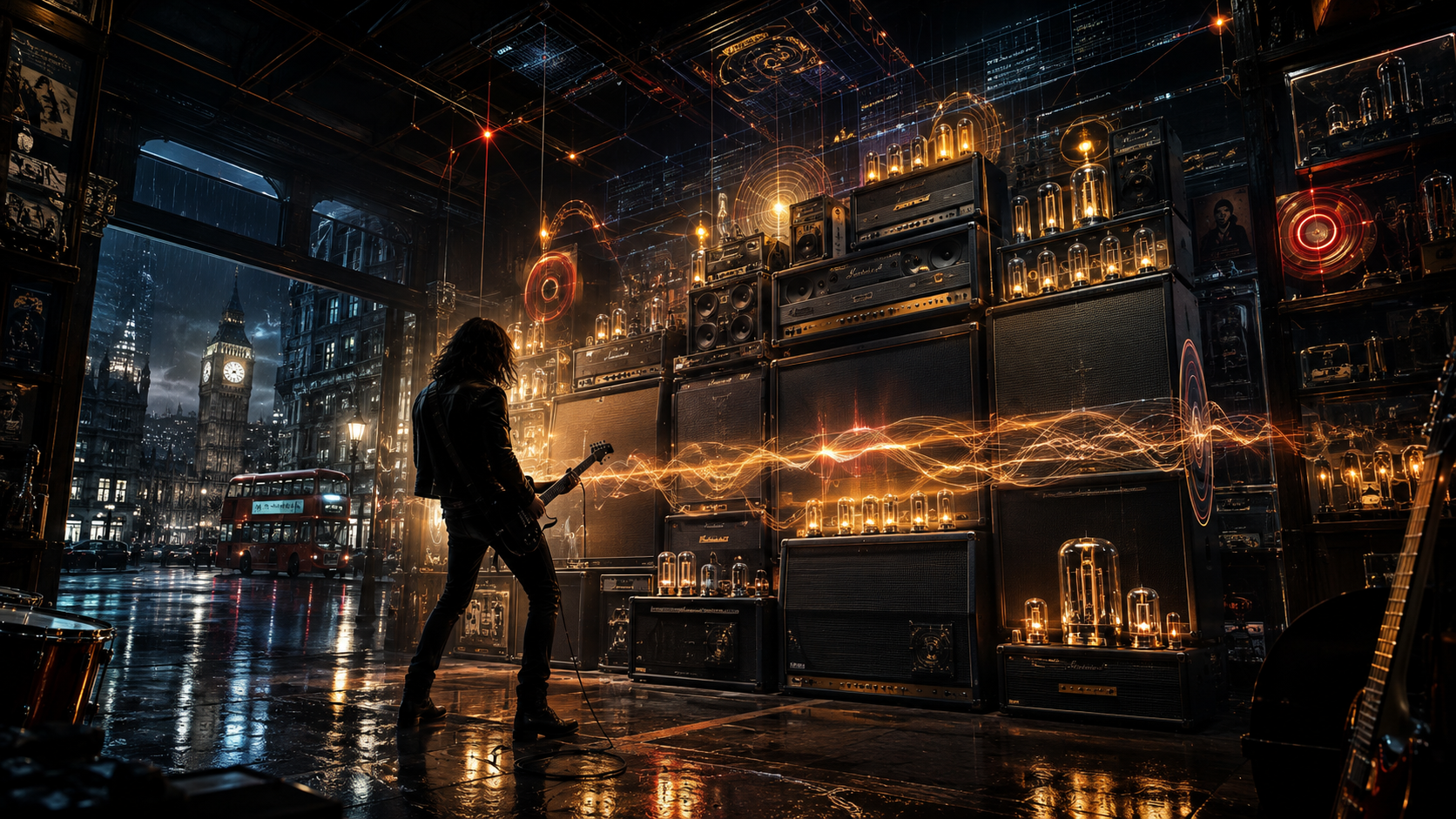
What came out of that amp — especially the natural tube distortion and overdrive it produced when pushed hard — became foundational to the sound of rock music itself. Jimi Hendrix, The Who, Eric Clapton with Cream, and later Slash with Guns N' Roses all built their signature tones around Marshall amplification. The "Marshall stack" — an amp head perched on tall speaker cabinets — became as much a visual icon of a rock concert as a sonic one. Jim Marshall himself earned the nickname "The Father of Loud," and Marshall Amplification remains a British company to this day, continuing to build amps for musicians after his death in 2012.
Two Marshalls Under One Name
Here's a nuance worth understanding if you're shopping the Marshall products on this site: the headphones and portable Bluetooth speakers carrying the Marshall name — the Kilburn, Major, Minor, and Stanmore lines — aren't built by Marshall Amplification itself. They're produced under a brand license by Zound Industries, a Swedish audio company, with Marshall Group overseeing the brand across both the original amp business and this separate, licensed consumer-audio business. The guitar-stage heritage is real and it's the reason the branding carries the weight it does — but the speaker in your living room and the amp behind a guitarist on stage come from related, not identical, parts of the same company.
Why It Still Matters
That heritage is exactly why Marshall's consumer speakers and headphones look and sound the way they do — the leather-and-brass aesthetic and the deliberately warm, slightly driven sound signature are a direct visual and sonic callback to six decades of amplifiers built for guitarists who wanted more character, not less. Few consumer audio brands can trace their design language back to Jimi Hendrix's stage rig with a straight line.
Browse the current Marshall lineup on our Featured Brands page.
SEO Keywords: Marshall history, Jim Marshall, Marshall amplifiers, Zound Industries, Marshall speakers, rock music history, guitar amp history