Digital Twins: The Invisible Copy of Reality That Is Changing How We Build the Future
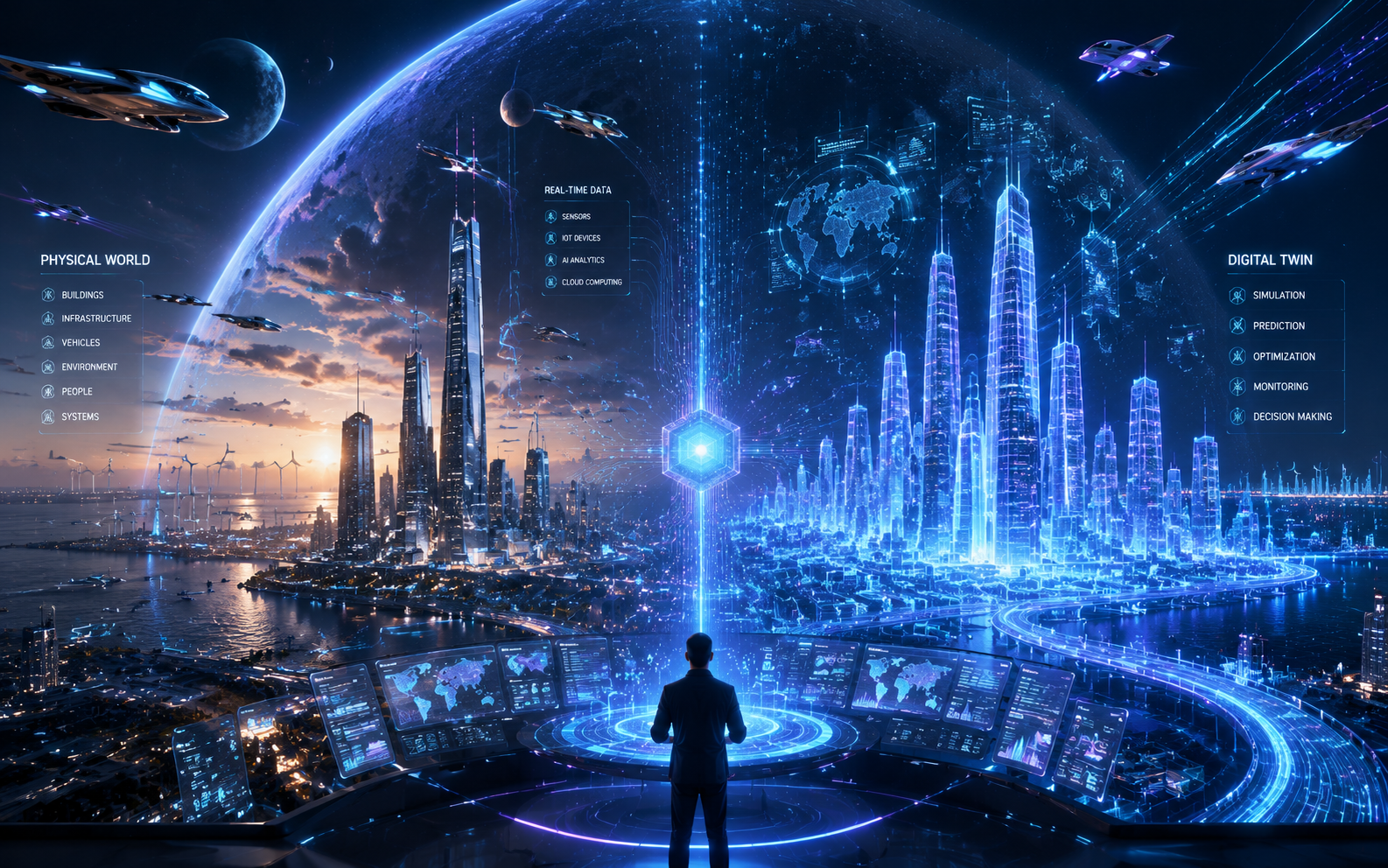
For thousands of years, humans have improved the world by building, testing, and repairing physical things. Engineers created models before constructing bridges, architects made drawings before building cities, and scientists used simulations to predict outcomes. But a new technology is changing this process completely. Instead of creating a simple model, we can now create a living digital copy of reality. This technology is called a Digital Twin — a virtual version of a physical object, building, city, machine, or even an entire ecosystem that updates itself using real-time data. A digital twin is not just a 3D model. It is an intelligent simulation that understands how something works, monitors its condition, predicts future problems, and helps humans make better decisions. The invisible copy is becoming one of the most powerful tools shaping the future of industries, cities, and everyday life. A Second Reality Running Behind the Real World Imagine a skyscraper in Dubai that has a hidden digital version existing inside a computer system. The physical building has thousands of sensors collecting information about temperature, energy consumption, air quality, elevator performance, and structural health. This information is continuously sent to its digital twin. The digital twin knows: How much energy the building uses Which systems require maintenance How people move through the building How weather affects the structure How the building could operate more efficiently Before a problem happens in the real world, the digital twin can identify warning signs and recommend solutions. The building does not wait for failure. It predicts the future. From Simple Models to Intelligent Worlds Traditional computer models are usually static. Engineers create them, analyze them, and use them for a specific purpose. Digital twins are different. They are constantly evolving. A digital twin combines: Artificial Intelligence to analyze patterns Internet of Things (IoT) sensors to collect live information Cloud computing to process massive amounts of data 3D visualization to recreate environments Machine learning to predict future behavior Together, these technologies create a digital world that mirrors reality. The physical world and digital world become connected in a continuous cycle. Reality creates data. Data improves the digital twin. The digital twin improves reality. Cities That Can Think Before They Grow One of the biggest applications of digital twins is the development of future cities. Before constructing a new district, governments can create a complete digital version of the area and test thousands of possibilities. They can simulate: Traffic movement Energy consumption Water usage Population growth Climate impact Emergency situations A city planner could ask: "What happens if 500,000 more people move into this area?" The digital twin could provide possible outcomes within minutes. Instead of building first and fixing problems later, cities can design smarter from the beginning. The Future of Architecture: Building in Two Worlds Architecture is entering a new era where every building may have two identities: One physical. One digital. Architects and engineers can monitor buildings throughout their entire lifetime — from the first design concept to demolition decades later. A digital twin can help answer questions like: How will this building perform after 50 years? Which materials create the lowest environmental impact? How can energy usage be reduced? How can the building adapt to future needs? The building becomes a constantly improving system instead of a finished product. Digital Twins and the Future of Manufacturing Factories are already using digital twins to create smarter production systems. Before manufacturing a new product, companies can simulate the entire factory process digitally. They can test: Production speed Machine performance Worker movement Supply chain problems Energy efficiency This reduces waste and saves millions of dollars. Companies no longer need to discover problems after production begins. They can solve them before the first machine starts. Healthcare: A Digital Twin of the Human Body One of the most futuristic applications of digital twins is personalized healthcare. Scientists are working toward creating digital versions of human organs and eventually complete human systems. A medical digital twin could help doctors: Predict health risks Test treatments digitally Understand how a patient may respond to medication Create personalized healthcare plans Instead of treating diseases after they appear, healthcare could move toward predicting and preventing them. The Hidden Challenge: Who Owns Digital Reality? While digital twins offer incredible possibilities, they also create new challenges. A digital twin collects enormous amounts of information. For a city, this could include: Movement patterns Energy usage Environmental data Infrastructure information For individuals, it could include personal health information. This raises important questions: Who controls this data? Who can access it? How do we protect digital versions of our lives? The future of digital twins will depend not only on technology but also on trust and responsible management. The Future: A World Where Everything Has a Digital Shadow In the coming decades, almost everything around us could have a digital twin. Buildings. Cars. Factories. Cities. Machines. Even entire planets. The physical world may become only one layer of reality. Behind it will exist a constantly evolving digital universe that helps humanity understand, improve, and protect everything we create. The most advanced technology of the future may not be something we see. It may be the invisible copy working silently behind everything. Digital twins are not replacing reality — they are becoming the intelligence that helps us design its future.